
SEO
Local SEO in Malaysia: How Businesses Can Improve Visibility in Their Target Cities
Lucianize Studio04 November 2026
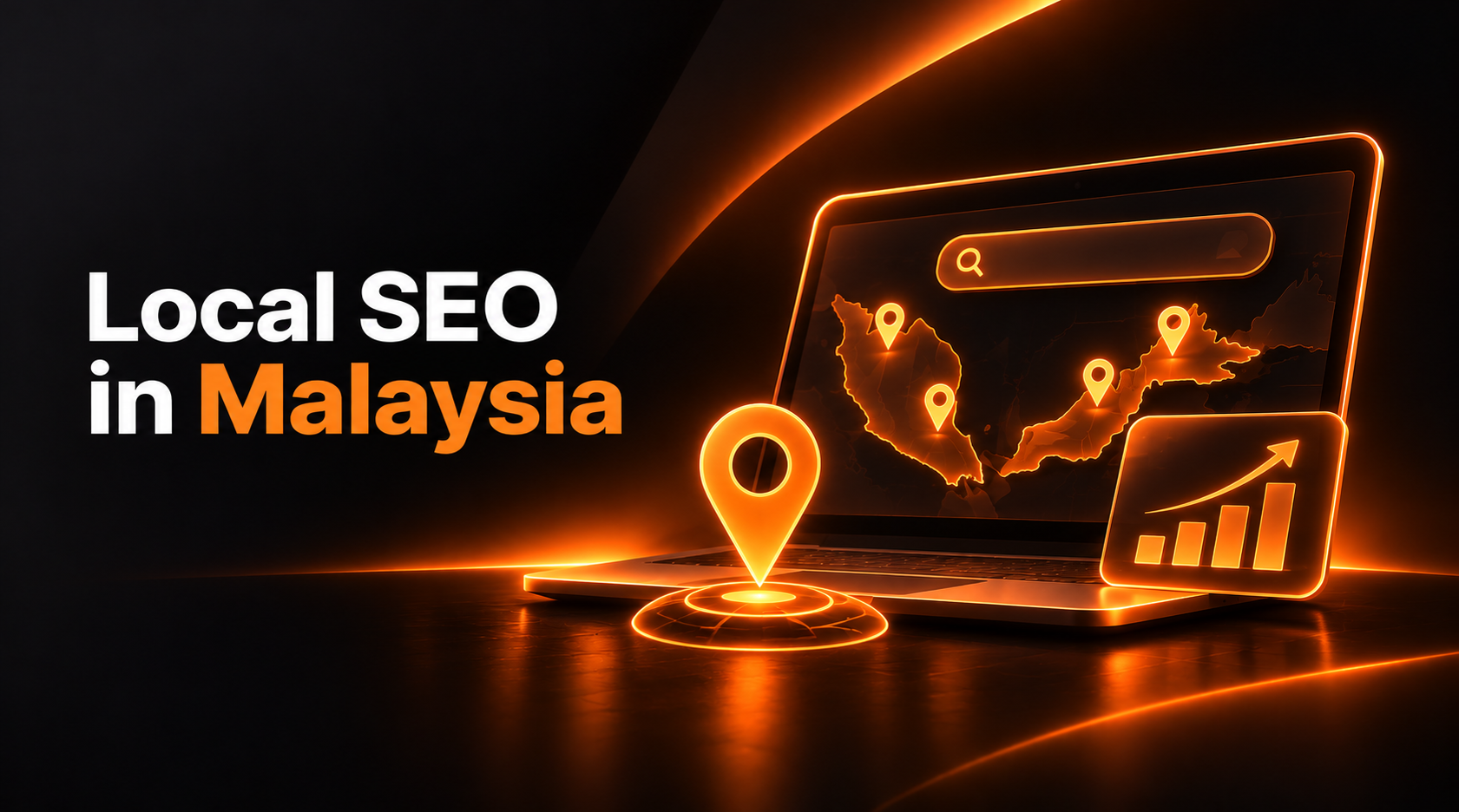
Local SEO helps customers find businesses relevant to their area. Learn how to manage business profiles, location information, reviews and city-specific website content responsibly.
Local search visibility begins with accurate business information
When someone searches for a service in a particular city, they are often looking for a provider they can contact, visit or work with. A business may offer services across Malaysia, but the information that helps a customer choose a provider is often local: where the company is based, which areas it serves, how to contact it and whether it is relevant to the customer's requirement.
Local SEO is the process of improving how a business is represented and discovered in location-related searches. It involves more than adding city names to website pages. The business needs accurate information, a useful website, a well-maintained business profile and a credible local presence.
1. Understand how local search works
Google explains that local results are mainly influenced by relevance, distance and prominence. Relevance is how well the business profile matches the search. Distance considers how far the business is from the searcher or location used. Prominence reflects how well-known the business is, with signals that may include information from across the web and reviews. Google also states that there is no way to request or pay for a better local ranking. Read Google's guidance on improving local ranking.
These factors matter because a business cannot control every local ranking variable. It can improve the accuracy and completeness of its information, explain its services clearly and build a credible presence, but it cannot guarantee that it will appear first for every city search.
2. Set up and maintain your Google Business Profile
For an eligible business, Google Business Profile provides a place to manage key details that can appear in Search and Maps. Keep the profile accurate and consistent with the way the business actually operates.
Review these items:
- Correct business name.
- Appropriate primary and additional categories.
- Accurate address or service-area setup.
- Current phone number and website.
- Opening hours and holiday hours.
- Clear description of the business.
- Relevant photographs and updates.
- A process for responding to customer reviews.
Do not add keywords to the business name unless they are genuinely part of the real-world business name. Do not create profiles for locations that do not exist. Inaccurate business information can confuse customers and create profile-management issues.
3. Make your website's location information clear
The website should explain where the business is based and which locations it genuinely serves. A company operating from George Town, Penang may serve customers across Malaysia, but it should not imply that it has offices in Kuala Lumpur, Johor Bahru or Ipoh unless that is true.
Useful location information can include the business address where appropriate, service areas, contact details, travel or delivery arrangements and examples of work in relevant regions. The details should help a customer understand whether the company can serve them.
Keep business name, address and phone information consistent across important profiles and directories. If the company moves or changes its phone number, update the relevant sources rather than leaving old information online.
4. Create location pages only when they provide real value
A location landing page can be useful when the business has distinct information for that area. It might describe local service coverage, a nearby branch, relevant projects, delivery details, local team or a market-specific process.
For example, a company with a physical branch in Penang and another in Kuala Lumpur may need separate location pages that accurately describe each branch. A service business covering several cities may instead need a clear service-area section and one or more pages where the actual service differences justify them.
Avoid creating dozens of pages that repeat the same paragraphs and only replace “Penang” with “Kuala Lumpur”, “Johor Bahru” or another city. Such pages offer little additional help to visitors and can resemble doorway pages.
Before creating a city page, ask:
- Do we genuinely serve this location?
- Can we provide useful, location-specific information?
- Is there a real office, team, project, service detail or customer need to describe?
- Does this page answer a different query from our existing service page?
- Can the business keep the information accurate?
If the answer is no, a single well-written service page may be the better choice.
5. Build a review process that is genuine and consistent
Reviews help customers understand other people's experiences. Ask customers for honest feedback through a consistent process after a genuine interaction.
Do not buy reviews, write fake testimonials, pressure customers to leave only positive feedback or offer incentives in a way that violates the platform's policies. Respond to feedback professionally and avoid disclosing private customer details in public replies.
A thoughtful response can show that the business pays attention to customer experience. The aim is not to manufacture a perfect rating; it is to build a trustworthy record of real interactions.
6. Make local service pages useful to customers
A local landing page should answer the questions a local customer is likely to have. For a web design company, that may include the types of websites it develops, its process, how meetings are arranged, examples of relevant work and how a business can request a quotation.
For a service provider, include real local details rather than generic statements. If delivery, travel, response time or service availability differs by area, explain the difference accurately.
Use clear headings and descriptive internal links to relevant services. A location page should not become a duplicate of every other page on the website.
7. Strengthen local relevance through useful content
Local content does not need to mention the city in every paragraph. It can answer questions that are genuinely important to customers in the area: local operating considerations, common project requirements, service availability, regional examples or how a process works.
A business should publish only information it can support. If an article refers to a local regulation, market statistic or programme, verify the source and date before publishing. Avoid presenting broad assumptions about a city as if they apply to every customer there.
8. Make sure mobile visitors can contact you
Local searches often lead to quick actions. A visitor may want to call, request directions, open WhatsApp or submit an enquiry. Make those options easy to find on mobile.
Check that contact details are clickable, forms are usable, opening hours are visible where relevant and the website explains what happens after an enquiry is submitted. A page may attract impressions but still fail to generate enquiries if the next step is difficult.
9. Measure local performance realistically
Useful measures may include Business Profile interactions, website clicks, calls, direction requests where applicable, organic search queries, location-page traffic and qualified enquiries.
Separate branded searches from non-branded discovery where possible. A rise in searches for the company name is different from an increase in people discovering the business through a service query.
Local rankings can differ by the searcher's location and the query. A screenshot from one device in one area is not proof that the business holds the same position everywhere. Use a consistent tracking method and review trends rather than relying on one isolated result.
10. A practical local SEO checklist
- Verify and maintain the correct Google Business Profile.
- Use the real business name, accurate contact details and genuine address or service-area information.
- Keep website contact details consistent with important external profiles.
- Explain which locations the business actually serves.
- Build separate location pages only when they provide distinct value.
- Ask for genuine customer reviews and respond professionally.
- Link local pages to relevant service pages.
- Make mobile contact actions simple.
- Track local enquiries and useful interactions, not just rankings.
- Review location information whenever the business changes.
Final thoughts: local SEO is about trust and relevance
A local SEO strategy should help a nearby customer understand whether the business is relevant, where it operates and how to contact it. It is not about placing the same city keyword on every page or pretending to have branches in locations the company does not serve.
Start with accurate business information, useful website content and genuine customer experience. Then improve the local details that help the business earn visibility in the markets it can realistically serve.
Lucianize provides SEO services for businesses seeking stronger search visibility. Contact our team to discuss local and national search priorities.
Sources / further reading
FAQ
Frequently Asked Questions
What is local SEO?
Local SEO is the work of improving how a business is represented and discovered in location-related searches. It can include accurate business profiles, local website content, reviews, consistent contact details and useful location information.
How does Google rank local businesses?
Google says local results are mainly based on relevance, distance and prominence. Businesses can improve the accuracy and completeness of their information, but they cannot control every ranking factor or guarantee a position.
Should I create a separate page for every Malaysian city?
Only when each page provides genuine, useful information for that location. Near-identical pages that simply replace the city name add little value. A single service-area page may be more appropriate when the business does not have distinct local information.
Does a business need a physical office to do local SEO?
The appropriate profile setup depends on the business model and Google's eligibility guidelines. A business that serves customers at their locations may have a service-area setup, while a business that receives customers at an address must represent that location accurately. Follow current platform rules.
Do customer reviews improve local SEO?
Google identifies reviews and ratings as one of the signals that can contribute to prominence. Businesses should seek genuine feedback, avoid fake or incentivised reviews that breach policy and respond professionally.

What Is MLM Software? Essential Features for Managing a Distributor Network
MLM software connects member structures, orders, compensation rules and administration. Learn the core modules to evaluate before choosing a platform for a direct-selling business.
Read Article
What Does an SEO Agency Actually Do? From Technical SEO to Content and Reporting
SEO is more than adding keywords to a website. Learn what a professional SEO process should include and how to evaluate the work behind the monthly report.
Read Article
Binary vs Unilevel MLM Plans: What Is the Difference and What Should Your Software Support?
Binary and unilevel plans organise distributor networks differently. Learn the structural differences, common rule variations and the software controls needed for accurate calculations.
Read Article